
4.4

Outdoor Gas Fireplaces: What Buyers Ask

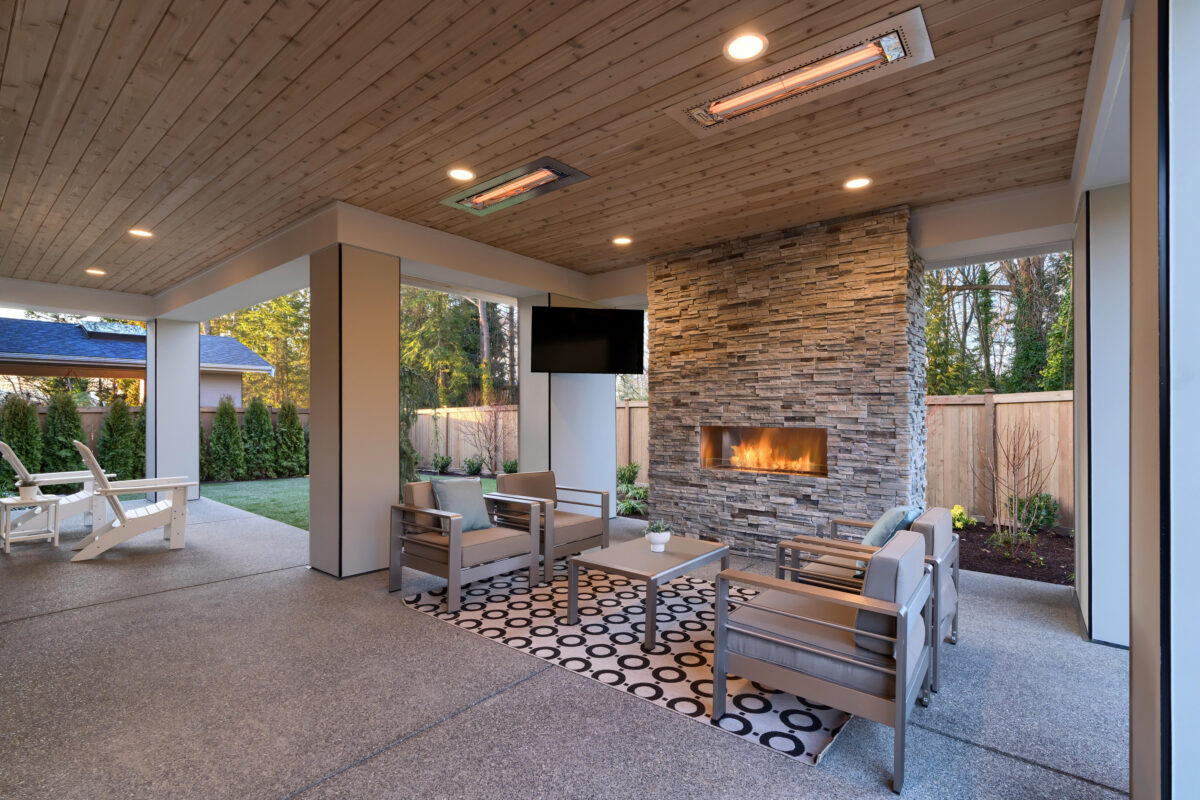
Many homeowners come to us with their mind already made up. They want gas, not wood, and they’re not looking for help deciding between the two. What they want is answers to the practical questions: does it need a chimney, does it need to be vented, will it keep them warm. Those are the questions that matter most before you build, and the ones we hear most often in the showroom.


One thing catches almost everyone off guard first, though. An outdoor gas fireplace often costs more to install than an indoor one, not less. People expect the opposite. The reason is underground. Literally. Gas lines can run 50 feet or more beneath the yard, and the fireplace usually needs a patio or finished surface to sit on before it goes in. 


A well-placed outdoor gas fireplace can add months to how long you spend outside at home in Michigan.


Venting and Chimney Requirements 

Does an outdoor gas fireplace need to be vented the way an indoor unit does? No. Indoor gas fireplaces vent through a flue system built into the house. Outdoor units release straight into open air without needing to vent around framing or rooflines. 


Does it need a chimney? Not for gas. That requirement belongs to wood-burning outdoor fireplaces, which still need a chimney to draw smoke out of the firebox, typically a metal system rather than masonry. If you’ve already settled on gas, that’s one less structural piece to plan around.


How Much Heat Can You Expect 

Outdoor gas fireplaces give off real heat, but the setting decides how much of it you’ll feel. Wind is the biggest variable we see. A fireplace left out in the open, exposed on all sides, loses warmth to the air around it fast. Put that same fireplace under a pergola or a covered patio, and it holds heat in the space instead of losing it. Where you place the fireplace ends up mattering almost as much as the fireplace itself.


Built for Michigan Weather 

A gas fireplace outdoor installation has to survive conditions an indoor unit never faces. Weather exposure changes the materials and the build entirely. Outdoor fireplaces are constructed from stainless steel, not the materials used indoors, and the firebox is engineered with drainage in mind, so rain has somewhere to go instead of collecting inside the unit. That’s a problem indoor fireplaces never have to solve.


Wind and rain come up in almost every consultation. Most installations get sheltered under a pergola or covered patio for exactly that reason. Gas fire pits, specifically, are built to withstand rain. Some can run safely while it’s actively raining, since water isn’t a threat to a properly designed unit.


Built-In vs. Portable: Why the BTU Gap Matters 

Big-box fire tables and custom built-in fireplaces get compared often, and the gap between them is more than looks. Portable units typically run around 60,000 BTUs, enough for a small flame, not much heat. You’ll notice the light before you notice any warmth. Built-in units commonly produce around 150,000 BTUs, a real difference in both flame size and heat output. 


We install built-in units only; portable fireplaces and fire tables aren’t part of what we offer. Portable units make sense for a rental, a small patio, or a weekend at the campsite. A built-in outdoor fireplace is built as a permanent feature instead, for homes designed around spending real time outside. Seeing the size difference in person, rather than in spec sheets, tends to settle the decision fast. Our showroom has both scale and heat output on display.


What Installation Involves 

Work for a natural gas outdoor fireplace line happens in-house here, the same as indoor installation. Permitting and code requirements don’t differ meaningfully from an indoor install, either. What does change is the scope of the groundwork: longer gas runs, site prep, and often a patio or hardscape addition to give the fireplace somewhere solid to sit.


Fire Pit or Fireplace? 

If you’re still weighing the two, cost and permitting land in about the same place either way, and performance is comparable. The real difference comes down to the look you’re after and how you want the space to feel. Neither one is the automatically cheaper or easier choice.


The Bottom Line 

An outdoor gas fireplace doesn’t need venting or a chimney the way an indoor unit does. It does need the right placement, the right materials, and a gas line run that’s more involved than most homeowners expect going in. Get those right, and it turns your patio into a room you’ll use most of the year. Not just a few weeks of it. It’s also the kind of investment that holds its value when built well and placed in the right space.


Talk to the Fireside Team Before You Build 

Every yard catches wind, sun, and shelter a little differently, and that’s exactly what shapes how an outdoor fireplace performs once it’s in. Stop by our Traverse City showroom and let’s walk through what your space can support. If you’re still exploring the bigger picture, our Outdoor Living page covers the full range of ways to extend your season beyond just the fireplace.

 

Schedule a Showroom Consultation

Quick Answers

Does an outdoor gas fireplace need to be vented?

No. It vents directly into open air rather than through a flue system like an indoor unit.
No, gas units don’t require one. Woodburning outdoor fireplaces do, typically a metal chimney rather than masonry.
Yes, particularly under a pergola or covered patio where wind isn’t carrying the warmth away. Open, unsheltered placements will feel less warm.

Does a Fireplace Add Value to a Home?

Most homeowners who add a fireplace aren’t thinking about resale. They’re thinking about January. About the card table pulled up close to the fire. The book they finally have time to read. The way a room changes when there’s something flickering in it. The financial case tends to come later, usually when it’s time to sell.

In Northern Michigan, that financial case is worth understanding before you build or renovate, not after. Understanding what buyers respond to and what the local market reflects helps homeowners make sure the investment they enjoy today pays off when they’re ready to move.

What Buyers Respond To 

When a buyer walks into a home with a well-designed kitchen, they stop. They picture their family in it. They can see Sunday mornings and holiday dinners. A fireplace evokes the same reaction. Buyers see the couch pulled close, the puzzle on the coffee table, the quiet evening in. They feel how the room works. That visualization, the immediate emotional response, is what makes a fireplace memorable. It’s what makes it feel like the heart of the home.

Placement amplifies this effect. A fireplace positioned as the focal point of a living room or great room, the spaces where people gather, creates that response naturally. The same is true outdoors. An outdoor fireplace draws people to patios and porches, giving buyers another space they can immediately picture themselves using. A unit tucked into a basement or added primarily for heat serves a different purpose and carries different weight with buyers.

What the Northern Michigan Market Tells Us 

The expectation around fireplaces has shifted in this market. Years ago, a fireplace was a common feature in homes across varying price points. As housing prices have climbed and starter homes in Traverse City now open around $400,000, a fireplace has moved into a different category. At prices $600,000 and above, buyers expect one. It’s not a bonus at that price point; it’s part of what the home should offer.

Northern Michigan’s climate makes the case stronger than in many other regions. Summer evenings here regularly drop into the 50s and 60s through June and into early September. A gas fireplace extends the usable season of a living space in a way that’s genuinely practical, not just aesthetic. Homeowners aren’t switching between heat and air conditioning to take the chill off a summer evening. They’re lighting the fire for twenty minutes and staying comfortable.

Industry estimates on added resale value vary, but a professionally installed fireplace in the right home at this price point consistently draws stronger buyer interest and can support a higher asking price. The return is real. How significant it is depends on what you install and how well it fits the home.

Which Fireplace Type Provides the Greatest Return 

Gas fireplaces lead on return for most Northern Michigan homeowners. The reasons are practical: instant heat, efficient operation, a real flame without maintenance or mess, and controls that range from a wall switch to a remote. Today’s buyers aren’t looking for a project. They want to turn it on and enjoy it. Gas delivers that.

That said, the type of fireplace matters less than how well it fits the home. A large, contemporary gas fireplace in a traditional Michigan home with log-cabin bones and classic millwork is going to work against resale, not for it. Buyers who want that home won’t connect with a fireplace that feels out of place in it. The goal is a fireplace that a prospective buyer feels was always meant to be there.

The questions worth working through before a fireplace installation:

  • Is this the focal feature of the room, or is it primarily a heat source?
  • Does it need surround stonework, cabinetry, or a mantel to feel complete?
  • Is the finish modern or traditional?

Getting those answers right before you build is what separates an investment that pays off from one that simply looks nice.

When an Existing Fireplace is the Opportunity 

Many Northern Michigan homes already have wood-burning fireplaces with aging infrastructure. A damaged flue or a system that hasn’t been used in years can feel like a liability when it’s time to sell. In many cases, it’s worth a closer look.

A gas insert addresses flue damage by pairing with a new liner system that runs through the existing flue. This removes the dependency on a compromised chimney system. The result is a fireplace that’s fully operational, efficient, and ready for the next owner to use on day one. Gas conversion is one of the most practical pre-sale improvements available to Northern Michigan homeowners. It resolves a structural concern, adds convenience, and reframes what felt like a liability into a feature buyers respond to.

Updating an existing fireplace can also change the character of an entire room. A dated brick surround makes a space feel older than it is. New stonework, a clean mantel, and a modern insert can shift a buyer’s perception of the whole home

The Investment Case in Plain Terms 

A fireplace is one of the few home improvements that delivers on two fronts. You get the years of use, the evenings in November when the house feels exactly right, the gatherings that keep happening in that room because it’s so welcoming. And when you sell, you have a feature that buyers at this price point expect and respond to.

The return is strongest when the installation is professionally designed to match the home and positioned where people spend time. When it’s finished in a way that feels intentional rather than added on. Those details are the difference between a fireplace that adds value and one that simply occupies space.

Talk to the Fireside Team Before You Decide 

Whether you’re exploring indoor options or planning a complete outdoor living space, our Traverse City showroom is the right starting point. We’ll walk you through options that fit your home, your style, and your plans.

Contact Fireside Service & Installation in Traverse City to schedule a showroom consultation.

Living in Traverse City, Michigan

Redefining Cozy, One Fire at a Time

People researching a move to Northern Michigan can find plenty of information online: photos of Grand Traverse Bay, lists of wineries, articles about the Cherry Festival. What they can’t find is what it actually feels like to live here, through all four seasons, in a community that has a way of getting into your bones. That part takes time. And people who make the move tend to say the same thing: it’s more than they expected.

We’ve lived and worked in this community for over 50 years, and we’ve watched that transformation happen again and again. Living in Traverse City, Michigan offers something genuinely hard to put into words, but you’ll know it when you experience it.

Why People Keep Coming to Traverse City

Water is the first draw, and it’s a powerful one. Traverse City sits at the southern end of Grand Traverse Bay, with Lake Michigan to the west and dozens of inland lakes spread across Grand Traverse, Leelanau, and Antrim counties. People relocating from larger cities are often looking for a lake lifestyle: the boating, the shoreline, the particular way a summer evening feels when you’re on the water, and Northern Michigan delivers it.

What surprises newcomers most, though, isn’t the water. It’s everything else. Traverse City is large enough to support the things people from coastal cities love: a serious food scene, award-winning wineries and breweries along the Old Mission and Leelanau peninsulas, live theatre, and world-class golf. The area sits along the 45th parallel, the same latitude as the wine regions of Burgundy and Piedmont, and has earned a well-deserved reputation as the Napa of the Midwest. You don’t have to give up the things you love about city living. You gain something you didn’t know you were missing.

Four Seasons, Four Reasons to Stay

One of the things that defines living here is the four seasons Michigan delivers in full.

Summer

Summer in Traverse City lives up to the photos. The National Cherry Festival anchors the Fourth of July with one of the region’s most beloved traditions. Farmers markets and arts and craft fairs fill the calendar through August, and Jacob’s Farm draws families with live music on weekends, fresh produce, and a corn maze when the season turns. The TART Trail system threads through the area for cycling and walking, offering another way to take in the landscape when you want to step off the water.

Fall

Fall is the season that tends to convert skeptics. The color along the M22 corridor through Leelanau County is the kind of thing that stops people mid-drive, and the routes between Traverse City and Charlevoix offer their own rewards. Cider stops and farm stands selling their own baked goods slow the pace in the best possible way. For people who’ve made the move from California or New York, fall is often when Northern Michigan stops feeling like a destination and starts feeling like home.

Winter

What are Michigan winters like? They’re long and real, and if you let them, they’re full. Northern Michigan gets meaningful snowfall, and that’s simply part of life here. But the region is genuinely built for it. Traverse City winter activities range from downhill skiing at Crystal Mountain and Boyne Mountain to fat biking and cross-country skiing on the VASA trail system. That’s 40 miles of terrain stretching toward Lake Leelanau and Elk Rapids. Downtown remains active, and winter here becomes a season to live in rather than one to endure.

Is Traverse City, Michigan a good place to live in winter? For people who come prepared to participate in it, the answer is yes. And there’s one more thing about a Northern Michigan winter worth mentioning: it changes the way your home feels. More on that shortly.

Spring

Spring arrives quietly after a Northern Michigan winter, and the effect is something closer to relief and celebration at once. The cherry blossoms on Old Mission Peninsula are worth planning around. Trails reopen, the bay starts calling again, and by May the region is fully alive. After the first winter, most people stop dreading spring’s arrival and start looking forward to having earned it.

What Nobody Tells You Before You Move

There are things about living in Traverse City, Michigan that don’t show up in a relocation guide, and they tend to be the things people value most once they’ve settled in.

The people here are genuine and kind, and newcomers feel it quickly. Neighbors check in, and the community takes care of its own. That warmth is one of the things people moving from California to Michigan consistently say they didn’t expect to find so soon.

The pace may take some adjusting. Things aren’t immediately available the way they might be in a larger city. Contractors book out further in advance. A shop might close because the owner went fishing for the week. Planning ahead becomes second nature, and patience becomes a practice. Most people who have been here long enough will tell you that the adjustment is worth it. The slower pace becomes one of the things they love most about their life here.

What people discover, more often than not, is that Northern Michigan gives something back. The lifestyle has a way of letting people settle into themselves. To be more present and more at ease. That’s not something you can find in a search result, but it’s something we’ve watched happen in this community for a long time.

Why Every Michigan Home Needs a Fireplace

Northern Michigan winters are long, and even the good ones ask something of you. If you’ve never lived somewhere with a real winter before, the first one tends to reshape how you think about home: what it means, and what makes it a place you want to stay.

A fireplace does more than heat a room, though it does that well. A gas fireplace can zone-heat an entire level of your home, taking the edge off without running the furnace hard. But the emotional dimension is just as real. The light from a fire on a gray January afternoon lifts the mood in a way that’s difficult to describe until you’ve experienced it. It becomes the gathering place: where the family lands at the end of the day, where the stockings hang at Christmas, where conversation finds its way back to what matters. Like the kitchen, the fireplace becomes the heart of the home.

Most Fireside customers who are new to Michigan lean toward gas for its ease and convenience. Those with second homes often want wood-burning outside for the ambience of an open fire on a fall evening. We help people find what fits their lifestyle, not just their floor plan. Our team manages the project from start to finish.

If you’ve never had a fireplace before, and many people moving from newer construction or city apartments haven’t, our showroom is a good place to start. Seeing one burning, understanding the options, makes your decision easier and your vision clearer.

Ready to Make Northern Michigan Home?

Living in Traverse City, Michigan means four real seasons and a community that doesn’t take long to feel like it’s yours. The winters are real, and so is the life you’ll build around them.

If you’re planning a move and starting to think about your new home, the team at Fireside Service & Installation would love to be part of that conversation. Stop by our Traverse City showroom and let’s discover what fits your space, your lifestyle, and your Michigan winter.

Visit Our Showroom